
Autoplay streams structured UI actions from your users’ browser sessions in real time. This tutorial wires that stream to Chameleon so that when the right moment arrives — a user stuck on a page, a first-time feature visit, a repeated error — your backend detects it and fires the correct Chameleon tour immediately.
This tutorial builds on How to trigger a User Tour. Complete that guide first — it covers the proxy route, EventSource connection, and payload structure. This page covers only what is specific to Chameleon.
1. Install Chameleon
Add the snippet to your app using your account token from Settings → Installation.2. Identify the user
Call this once the user is authenticated. Use the sameuserId you send to PostHog so Autoplay can match sessions correctly.
3. Create a tour in Chameleon
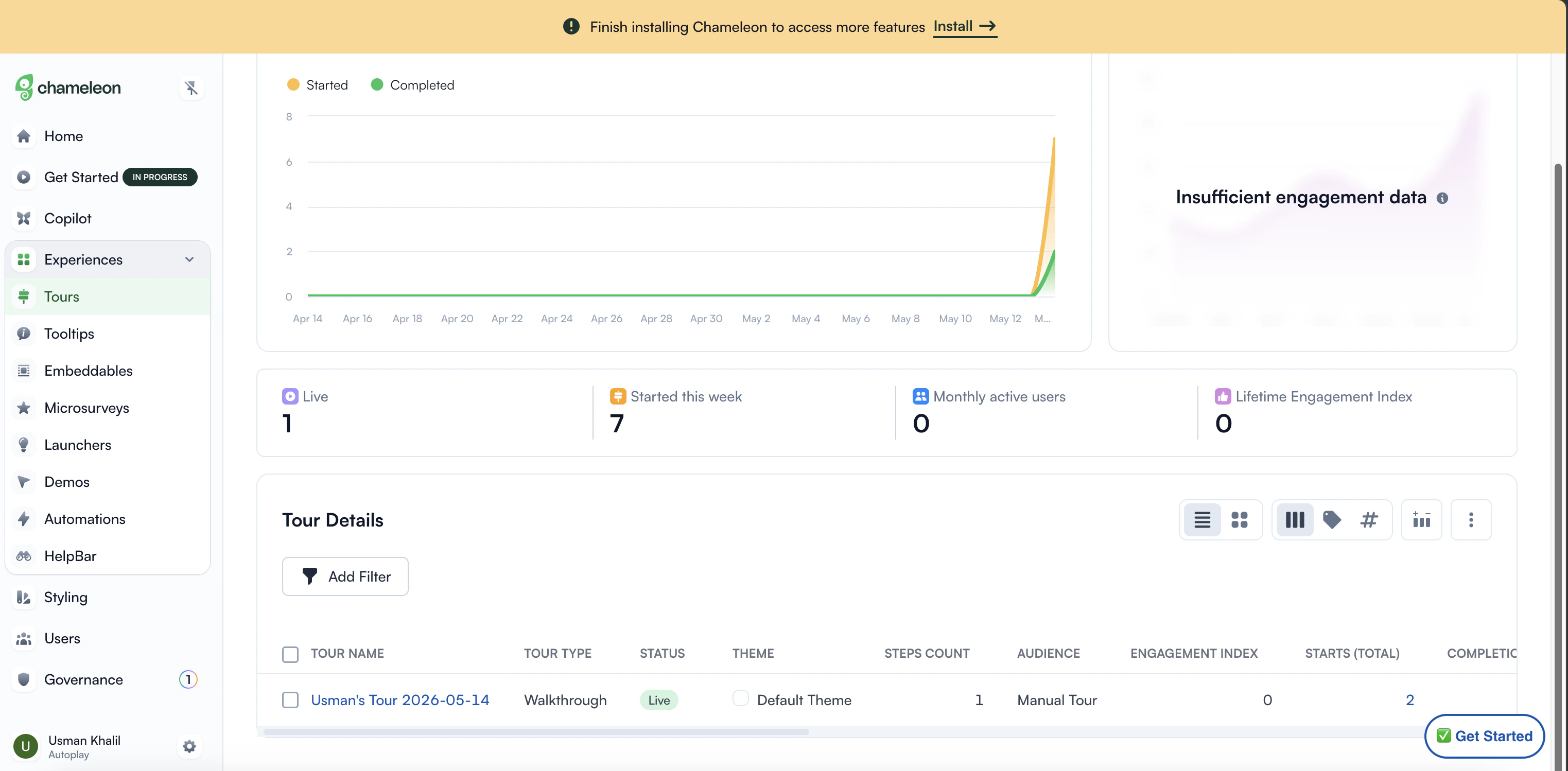
- In the Chameleon dashboard go to Experiences → Tours and click + Create a Tour.
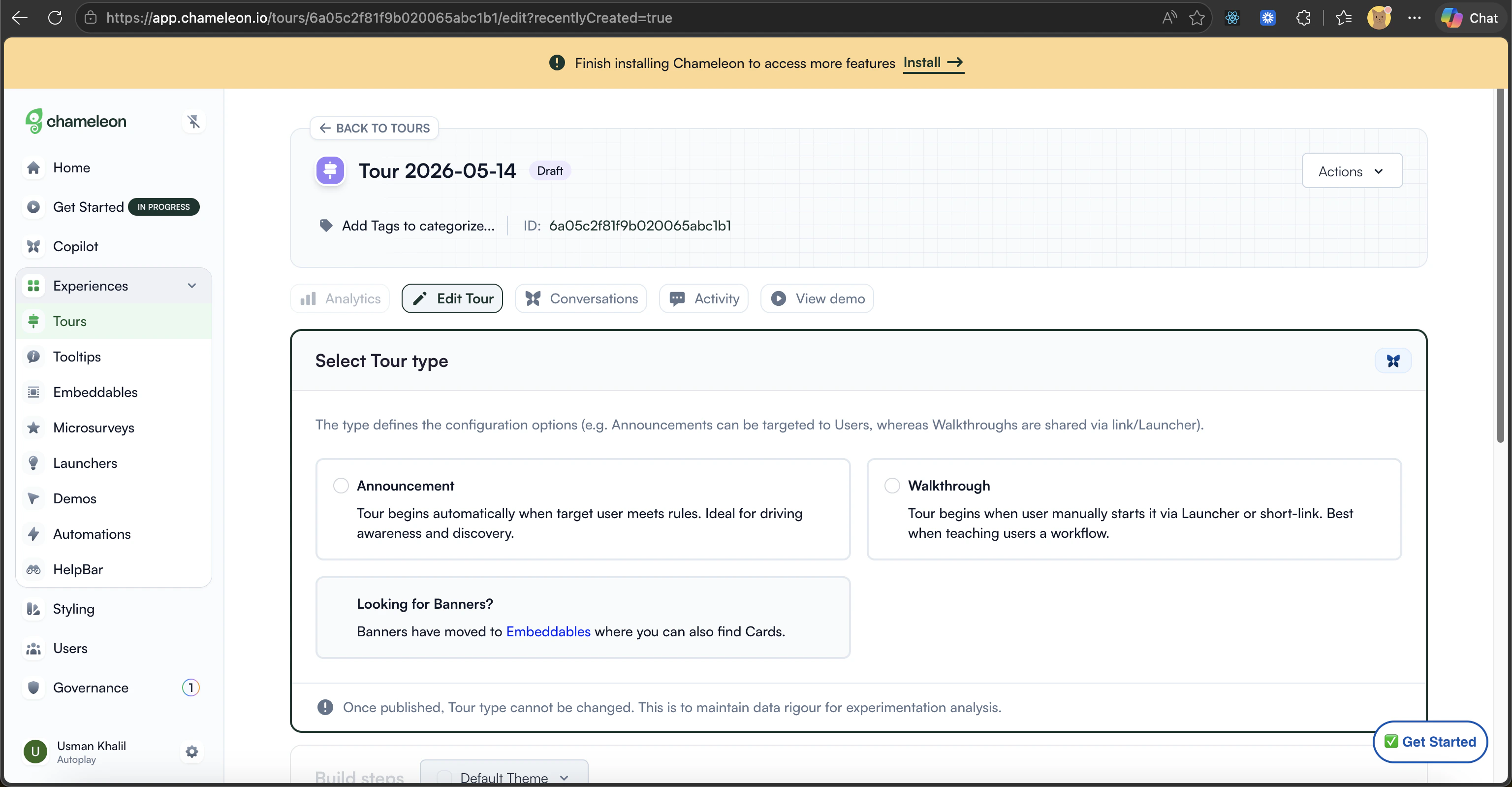
- Select a tour type — Announcement starts automatically when a user meets targeting rules; Walkthrough starts manually via a Launcher or short-link.
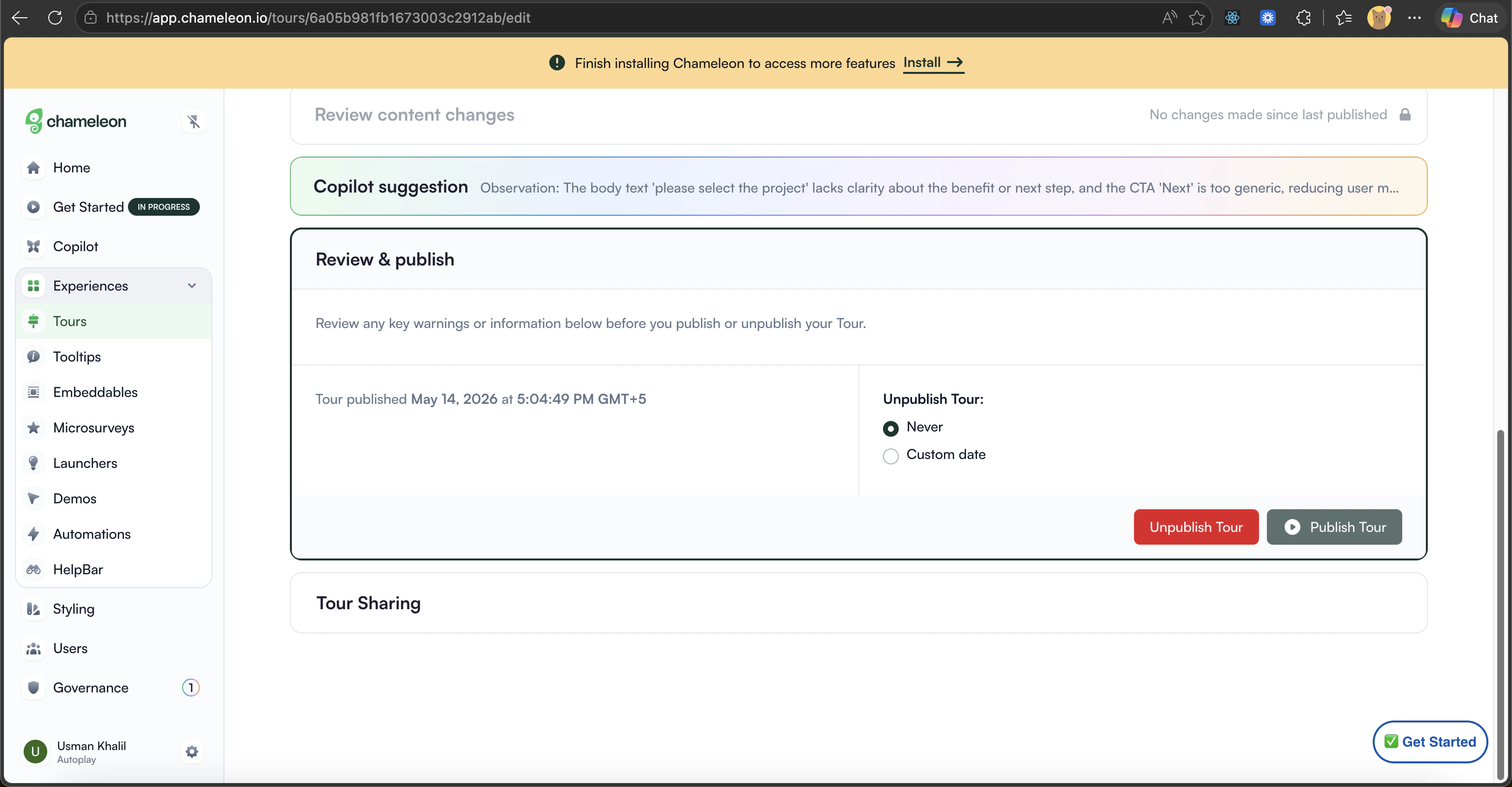
- Build your steps, set any targeting rules (page URL, user segment, etc.), and publish the tour.
- Note the Tour ID displayed below the tour name (
ID: <tour_id>). Pass this as theflow_idwhen triggering.
4. Trigger the tour
In youronmessage handler from step 3 of the manual path, add the Chameleon trigger call:
flow_id in the payload maps to the Tour ID of your Chameleon tour, visible in the URL when editing the tour in the Chameleon dashboard.